Thursday, July 23, 2015

[VIDEO] CBS This Morning Presses De Blasio from Left on Uber, Economy

Liberal New York City Mayor Bill de Blasio sat down for a friendly interview on Thursday’s CBS This Morning and the three hosts repeatedly pushed him from the left on a variety of issues ranging from his fight with Uber to his relationship with Pope Francis on climate change and income inequality

.  The majority of the interview focused on de Blasio’s ongoing fight with ride sharing company Uber, and his efforts to regulate it like taxis and CBS’s Charlie Rose complained ”it seems like Uber whenever it's challenged simply gets its way in the end.”

After the New York major whined that Uber was allegedly contributing to congestion and pollution throughout the city which, in his view, demanded the city regulate the company, Norah O’Donnell wondered “why did you cave?” and allow Uber to expand.
Later in the segment, Rose touted de Blasio’s recent meeting with Pope Francis where the two discussed climate change and rather than press his guest on the liberal views the two share the CBS host merely asked de Blasio to “ [t]ell us about” the meeting. 
After de Blasio called Pope Francis the “strongest moral voice in the world” Rose eagerly wondered “what is his impact on climate change?” and gave the New York City mayor another opportunity to tout his liberal views.Rose then pointed out how the pope “raised questions about income inequality...And, in fact, about capitalism per se.” 
Nowhere in the segment did Rose or his CBS co-hosts bother to press de Blasio on his liberal views regarding climate change or “income inequality” and whether not his solutions would damage the economy. Instead, Rose wondered how the mayor could push Hillary Clinton far enough to the left in order to earn his endorsement: 
So what does Hillary Clinton have to do to convince you to support her because that’s been one of the issue you say you’re waiting and seeing?  
De Blasio stressed the need for liberal cities to provide mandatory paid sick leave and an raise their minimum wages which Rose found the perfect time to ask yet another lefty question: “Will there be $15 minimum wage in New York?”

The New York mayor argued that he was “working toward” a $15 minimum wage which prompted Norah O’Donnell to wonder “why not endorse Bernie Sanders?” 
In the past, CBS This Morning has done its best to help tout the liberal agenda of de Blasio. During an appearance on May 20, the three hosts gave him an unchallenged platform as Charlie Rose declared him one of the “leaders of the progressive wing of the Democratic Party.” 
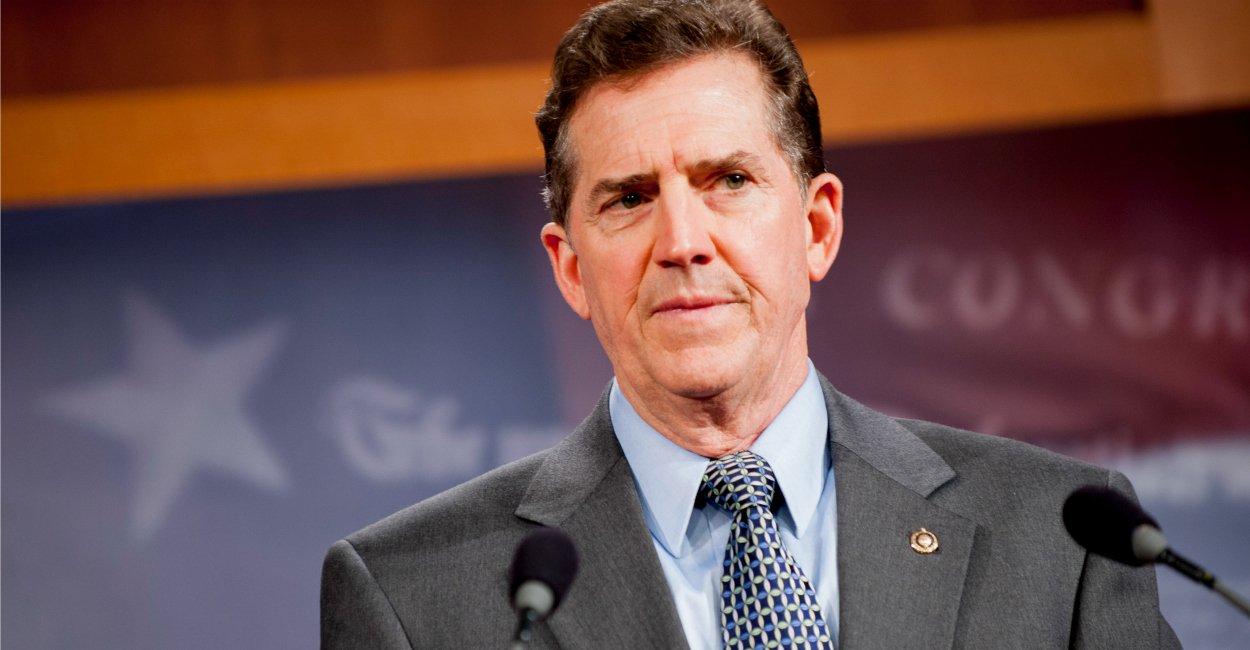
The Export-Import Bank Needs To Stay Dead.

The Export-Import Bank is dead. Let’s keep it that way.
This hoary relic of the Great Depression has been plagued with corruption and fraud. Its lending practices primarily benefit a handful of wealthy American mega-corporations and, far too often, unsavory interests abroad.
Ex-Im’s charter expired on June 30, but special interests continue to press Congress to revive it. Lawmakers wishing to keep this monument to crony capitalism dead and buried can draw some valuable “how-to” lessons from past successful efforts to resist wasteful special-interest pleadings.
In 1988 Congress established the BRAC (Base Realignment and Closure) Commission to close unnecessary and expensive military bases. For years, successive administrations had treated basing decisions as political bonbons, keeping certain bases open for their friends, while closing others.
Congressmen and senators were unwilling to bear the weight of making rational closure decisions themselves. Voting to close a base in one’s home state carried severe political risk. And if politicians in one state voted to close a base in another state, the congressmen and senators from that state would likely return the favor.
Local economies often grow dependent on military bases. So even if keeping a base open was fiscally irresponsible (from a federal perspective) and wholly unnecessary for the nation’s security, the parochial interests of constituents usually trumped national interests for congressmen and senators.
Enter, the BRAC process. It allowed lawmakers to escape voting on individual base closures. Instead, they would cast a single, up-or-down vote on a package of closures recommended by non-political and military experts. With this arrangement, members could reassure their constituents that they were acting in the best interest of the nation, not targeting a hometown base for closure.
Creating the BRAC Commissions process required strong congressional leadership, the same type of leadership that is desperately needed now to fight the favoritism and cronyism that pervades Washington.
Lawmakers should also look back to how they were finally able to ban “earmarks” four years ago. “Earmarking” was the appropriations practice that allowed members of congress to “bring home the bacon” by directing federal funds to friends and supporters back home. Over 70 percent of Americans believed earmarks were wasteful and should be discontinued. Privately, many members of congress agreed. But when a public vote was taken in the Senate in 2010, the proposed ban on earmarks failed 39 – 56.

California ranks 38th in kids' well-being

Parents struggling to earn a living, the effects of poverty and astronomical housing costs all drag down California's children to the point that an annual national survey ranks the Golden State 38th in the nation in overall child well-being.

And, the benefits of the economic resurgence aren't evenly filtering down, leaving the state's children 49th in the nation in economic well-being, according to the 2015 Kids Count Profile released late Monday by the Annie E. Casey Foundation.


"That's really alarming for the future of our state," said Jessica Mindnich, director of research for the Oakland-based advocacy group Children Now, which analyzed California data for the survey.


Nearly one in four children, or 23 percent, lives in poverty. And the toll may be even higher in Silicon Valley. Even three minimum-wage jobs together would fall $10,000 short of what it takes to support a family of three in the valley, said Dana Bunnett, director of the San Jose-based advocacy group Kids In Common.


The same disparity appears in the Kids Count rating for education, where California landed 38th among the states. It ended up in the bottom quarter in part because in 2013, 54 percent of the state's eligible children were not attending preschool, a 2 percentage point decline from 4 years earlier. And on national tests, nearly three-quarters of California fourth graders had not reached proficiency in reading, and nearly the same proportion of eighth graders lacked proficiency in math.


However, in one bright spot, the survey found that in 2012, the percentage of high school students who did not graduate on time fell to 18 percent, compared with 29 percent four years earlier.

While some of the data may not be the latest available in the state, the Kids Count survey chose the most recent year for which all states had data.


The most encouraging development the survey found was in health -- a vast improvement that surveyors attribute to the state's early and full embrace of the Affordable Care Act.

The percentage of California children without health insurance fell to 7 percent in 2013, a four percentage-point drop in five years. Likewise the rate of child and teen deaths fell, from 24 per 100,000 to 20.
Mindnich credits that to California embracing the federal Affordable Care Act and moving toward insuring all children.
She believes that education similarly will improve, with the state projecting it will reach pre-recession funding levels for schools soon. "I think we are well-positioned to see kids doing better five years down the road."

MASSACHUSETTS: Tax collections beat estimates, state budget 'in good shape,' Deval Patrick's finance director says

BOSTON — With tax collections running over original estimates by $524 million and mid-year spending levels down, this year’s state budget is in “good shape,” according to the Patrick administration’s director of finance, who says he expects the state Senate this week to add spending to next year’s proposed $36.25 billion annual budget.

During an investor conference call Monday ahead of planned state borrowings, Executive Office of Administration and Finance Director of Finance Rob Dolan described state budgeting efforts for fiscal 2015 as “boilerplate” compared to last spring’s debate over new taxes and transportation investments.

Gov. Deval Patrick’s proposed fiscal 2015 budget totals $36.37 billion, a 4.9 percent increase in spending. The House-approved plan calls for $36.32 billion in spending and the Senate Ways and Means Committee has offered a $36.25 billion bill, which senators plan to begin debating on Wednesday.

“We do expect them to add additional spending on the floor,” said Dolan.

After noting the similar bottom lines on the three budgets, Dolan said, “This year is much more boilerplate. From a bottom line perspective there is not that much of a difference.”
The House, Senate and Patrick generally agree on increased funding levels for education and local aid next year, as well as investments of $140 million in transportation and $163 million to reduce the state’s unfunded public pension liability, Dolan said.

With less than two months left in fiscal 2014, Patrick and the Legislature have so far agreed to $208 million in mid-year spending, with a $145 million supplemental budget nearing the governor’s desk.

Dolan said the $353 million in supplemental fiscal 2014 spending to date is a “little below” previous years - $441 million in fiscal 2013 and $540 million in fiscal 2012 - but served notice that another mid-year spending bill is in the works.

“We do typically file a year-end supplemental bill that takes care of any year-end bill paying needs. So we’re probably going to be teeing that up in the next month or so,” he said.

Dolan identified casino revenues as an example of non-tax revenues that state officials are monitoring. State officials originally forecast $83 million in casino licensing fees being available this fiscal year, but are now assuming that two resort casino licenses will be awarded in fiscal 2015, which begins July 1.

One significant unsettled budget issue involves the handling of larger, one-time tax settlements. Patrick and Senate leaders support a change in state law that would make $200 million in settlement funds available this fiscal year while the House supports making that change in fiscal 2015. Under current law, $421 million in tax settlement funds this fiscal year will be steered to the rainy day fund, Dolan said.

Documents made available in connection with the investor call show the state’s stabilization fund balance fell from $2.335 billion in fiscal 2007 to $670 million in fiscal 2010 before hitting a recent high of $1.65 billion in fiscal 2012 and then dipping to a projected balance of $1.36 billion on June 30, 2014.

According to deputy assistant treasurer Drew Smith, the Massachusetts Treasury expects to have issued $2.2 billion in new money bonds in fiscal 2014, $800 million in revenue anticipation notes and $628 million in refunding bonds. The Treasury on Wednesday is scheduled to price $200 million in federally taxable general obligation bonds and has a $500 million general obligation bond sale targeted for June 11.

Nolin Greene, senior debt analyst at the Treasury, said per capita income growth in Massachusetts from 2012 to 2013 was 2.4 percent, a growth rate that was “about in the middle” among states keeping per capita income here - $56,923 - at 128 percent of the national average. North Dakota passed Massachusetts, pushing the Bay State down to third among states for per capita income.


Democrats drop Thomas Jefferson and Andrew Jackson names from annual fundraising dinner

  • Portrait of Thomas Jefferson - CIRCA 1901 (artist unidentified).
  • A portrait of Thomas Jefferson, shown left, circa 1901 (artist unidentified) and a
Thomas Jefferson and Andrew Jackson are history in Connecticut.
Under pressure from the NAACP, the state Democratic Party will scrub the names of the two presidents from its annual fundraising dinner because of their ties to slavery.
Party leaders voted unanimously Wednesday night in Hartford to rename the Jefferson Jackson Bailey dinner in the aftermath of last month’s fatal shooting of nine worshipers at a historic black church in Charleston, S.C.
The decision is believed to be unprecedented and could prompt Democrats in other states with similarly named events to follow suit.
“I see it as the right thing to do,” Nick Balletto, the party’s first-year chairman, told Hearst Connecticut Media on Wednesday night.
“I wasn’t looking to be a trailblazer or set off a trend that’s going to affect the rest of the country. Hopefully, they’ll follow suit when they see it’s the right thing to do.”
Take our poll: What should the new name be?
Democrats cited Jefferson and Jackson’s ownership of slaves as a key factor in the decision, as well as Jackson’s role in the removal of Native Americans from the southeastern U.S. in what was known as the Trail of Tears.
In 2005, the school board in the city of Berkeley, Calif., considered a measure to change the name of Thomas Jefferson Elementary School for similar reasons, but the moniker remains.
Scot X. Esdaile, the head of Connecticut’s NAACP, said it was high time for Democrats to rebrand the event.
“I would applaud the current leaders in Connecticut in making the symbolic first step and striving to right the wrongs of the past,” Esdaile said.
“You can’t right all the wrongs, but I think it’s a symbolic gesture of our support for their party.”
The decision immediately drew criticism from some historians as a politically correct overstep, including Robert Turner, a law professor at the University of Virginia, which was founded by Jefferson.
“It is a sad and short-sighted decision based upon tragic ignorance,” said Turner, who has written extensively about Jefferson’s legacy.
This December will mark the 150th anniversary of the enactment of the 13th Amendment of the Constitution, which abolished slavery.
“The authors of that amendment purposely chose language drafted by Jefferson in an unsuccessful effort to outlaw slavery in the Northwest Territories as a means of honoring Jefferson’s struggle against slavery,” Turner said.
“If (Democrats) understood Jefferson’s lifelong opposition to slavery, they would have reached a different conclusion.”
A new name for the event, which marked its 67th year in June with Massachusetts Sen.Elizabeth Warren as its headliner, will be chosen in the fall.
The event’s third namesake, John Bailey, who led the state party and then the Democratic National Committee under presidents John F. Kennedy and Lyndon B. Johnson, will likely be preserved.
Balletto said blacks and Native Americans are a major constituency of the Democratic Party.
“When something offends someone, it’s beyond being politically correct,” Balletto said.
“It just causes a need for change.”
Balletto said Jefferson was a great founding father, but “had some issues.”
“You can’t change history, but you don’t have to honor it,” Balletto said.
neil.vigdor@scni.com; 203-625-4436; http://twitter.com/gettinviggy

Appeasing Iran Ignores the Lessons of History

 Expect a Nobel Peace Prize for Secretary of State John Kerry now, followed by Chamberlain-like infamy later.

The now-concluded Iran nuclear negotiations predictably reflect ancient truths of

 While members of the Obama administration are high-fiving each other over a deal with the Iranian theocracy, they should remember unchanging laws that will surely haunt the United States later on. 

First, appeasement always brings short-term jubilation at the expense of long-term security. British Prime Minister Neville Chamberlain was a beloved peacemaker after the Munich Agreement of 1938 with Adolf Hitler but derided as a conceited fool and naif by May 1940. 

A few years from now – after Iran has used its negotiated breathing space to rearm, ratchet up its terrorist operations, and eventually gain a bomb to blackmail its neighbors – the current deal will be deeply regretted. Expect a Nobel Peace Prize for Secretary of State John Kerry now, followed by Chamberlain-like infamy later. 

Second, the appeasement of autocrats always pulls the rug out from under domestic reformers and idealists. After the Western capitulation at Munich, no dissenter in Germany dared to question the ascendant dictatorship of Adolf Hitler. 

RELATED: Is the Iran Deal the Worst Political Blunder of All Time? Until last week, Iranian dissidents and reformers had blamed the theocracy for earning Iran pariah status abroad and economic ruin at home. Not now. The haughty ayatollahs are bragging that they faced down the West and will restore the economy – as they wink to applauding crowds that Iran will soon be nuclear and dictate its terms to the Middle East. 


Third, appeasers always wrongly insist that the only alternative to their foolish concessions is war. Just the opposite is true.


Exclusive: More MSNBC Changes Coming with Three Shows Out, Hard News and Chuck Todd Back

A well-placed source tells me MSNBC will announce today major changes to its afternoon lineup…arguably the most significant revamp the network has made at one time in its 19-year history.
Out: The Cycle at 3:00 PM. Now with Alex Wagner at 4:00 PM. The Ed Show with Ed Schultz at 5:00 PM (all times eastern).
In: Chuck Todd at 5:00 PM. Similar to Jake Tapper at CNN doing both weekday afternoons (hosting The Lead) andanchoring Sunday morning’s State of the Union, Todd will also continue to work weekends as moderator of Sunday’sMeet the Press. Todd’s MSNBC show will likely take on its old name The Daily Rundown, but that is not a guarantee.
More interesting: Andrea Mitchell will keep her program at noon (Andrea Mitchell Reports). Thomas Roberts will continue to anchor his midday news program from 1:00-3:00 PM. The programs being cancelled at 3:00 PM (The Cycle) and 4:00 PM (Now with Alex Wagner) will be replaced by a straight news program (similar to Roberts’ two-hour newscast preceding it). Whether that 3:00-5:00 PM slot goes to Brian Williams is not known at this time, but it would certainly make the most sense to put Williams directly up against Fox’s Shepard Smith (Shepard Smith Reporting) and CNN’s Brooke Baldwin (CNN Newsroom) for the first hour in a similar format.
Since coming on four months ago, relatively new NBC News Chief Andy Lack is obviously making his presence felt. Ratings are in the toilet…it somehow finished 5th in a four-horse race recently. Staffers and talent are walking on eggshells. And unless your last name is Matthews, Maddow or your first name Joe or Mika, nobody appears safe, as Mediaite’s Andrew Kirell reported exclusively earlier this week.
Once self-dubbed The Place for Politics, MSNBC goes back to its 1996 roots: More news, less talk.
The place for politics pertains only to mornings and prime-time now. Lack quickly realized that the lack of balance via almost all opinion programming and very little hard news offerings was killing the network as audiences ran to CNN and Fox in droves when any big breaking story was happening. The good news for fans of the network is the Lack’s actually doing something about it…all while tapping resources from the NBC Mothership to help make it happen without breaking the bank.
Fixing dayside was a no-brainer. 6:00 PM and 8:00 PM are likely next. Some old faces may be returning. MSNBC will soon look very different, courtesy of the biggest change in its lineup in nearly two decades.
And Andy Lack isn’t done shaking things up at 30 Rock…not by a long shot.

Cap-and-Trade Funds Targeted for High-Speed Rail Project

Bills being introduced that monitor or change terms for the state’s high-speed rail project are a rarity. However, there are two bills brewing in the Legislature.
One has a shot at passing. The other doesn’t.
Senate Bill 400 would require the California High-Speed Rail Authority to use at least 25 percent of its cap-and-trade funds for projects to reduce or offset construction emissions. The bill comes as two groups have brought legal challenges to the state’s cap-and-trade program and the state’s plan for measuring emissions from the high-speed rail project. The bill traces its origins to the powerful Hispanic caucus and is expected to pass in the largely pro-rail legislature.
SB400, introduced by Sen. Ricardo Lara, D-Bell Gardens, has been approved in the Senate and is moving through committees in the Assembly.
Last year the Legislature appropriated 25 percent of the state’s revenues from cap-and-trade auctions to the high-speed rail project. SB400 would reduce construction funds to 18.75 percent of the revenues, with the remainder going to “reduce or offset greenhouse gas (GHG) emissions directly associated with the construction of the high-speed rail project and provide a co-benefit of improving air quality,” according to a Senate analysis of the bill.
The analysis suggests that this bill might save the cap-and-trade program, which is being challenged by two lawsuits.

Lawsuits against AB32 and HSR

A suit brought by the Pacific Legal Foundation, which favors limited government and “sensible environmental policies,” claims that the very existence of the cap-and-trade program is an illegal tax. The case is on appeal and expected to be heard in the fall.
A second suit asserts that a state plan to reduce emissions improperly calculated the impact of the high-speed rail project — which the plaintiffs allege will actually contribute to greenhouse gases instead of reduce them.
The plaintiffs in their complaint say that the state’s estimates “were neither real, permanent, quantifiable or verifiable but were instead illusory because in reality the construction of the (rail) project would result in a significant increase in (greenhouse gas) emissions prior to 2030 or beyond.”
The suit is being brought by the Transportation Solutions Defense and Education Fund, a nonprofit environmental group.

Cap and trade bailing out high-speed rail project

The rail project is not slated to be operational by 2020, which is the deadline in state law to reduce the state’s greenhouse gas emissions to 1990 levels.
The Senate analysis points out that state law restricts the use of cap-and-trade funds.
“The Constitution requires that a clear nexus exist between an activity for which a mitigation fee is used and the adverse effects related to the activity on which that fee is levied. …
“It is important that legislation allocating cap-and-trade revenues ensure that the funds are being used to reduce (greenhouse gas) emissions. If opponents of the program can convince the courts that the revenues are not being used appropriately, the entire cap-and-trade program could be jeopardized.”
The analysis hints that the rail program’s use of cap-and-trade funds, as currently outlined, doesn’t meet legal standards, and that passage of the bill would shore up the legal standing of the program and help the state win the pending court cases.

Should the servicemen murdered in Chattanooga receive Purple Hearts?

Senate Armed Services Committee chairman John McCain is working to ensure that the four Marines and Navy petty officer who died in the terror attack on the Marine recruiting station in Chattanooga recieve Purple Heart medals for their sacrifice.
Some of the Marines may have saved their fellow service members by ushering them to safety before returning to try to neutralize Abdulazeez. 
“While I cannot share specific details about what happened that morning, our Marines reacted the way you would expect — rapidly going from room to room. They got their fellow Marines to safety,” Maj. Gen. Paul Brier, commander of the 4th Marine Division, said during a news conference Wednesday. “Once they got them to safety, some willingly ran back into the fight.” 
Twenty Marines and two Navy corpsmen were in the naval reserve center inspecting their equipment after returning from a training program, Gen. Brier told reporters, indicating that the massacre could have been much worse if not for the Marines’ acts of courage. 
Lt. Cmdr. Timothy White, the support center’s commanding officer, used his personal firearm to engage Abdulazeez during the attack, the Navy Times reported. Four sources confirmed that the officer’s actions were included in a report distributed to senior Navy leaders after the attack.

Charlie Daniels on PP: ‘It’s High Time to Stop Funding the Butchering and Exploitation of the Unborn’ by Charlie Daniels


Planned Parenthood supporter holds sign that reads, "I Stand With Planned Parenthood." (AP File Photo)
A small quiz:
Who do you think made the following statement about blacks, immigrants and indigents?
"Human weeds … spawning class of human beings who never should have been born at all.”
Who said that they should enlist black ministers to sell black women on the prospect of abortion and the use of contraceptives in what was dubbed “The Negro Project”?
“We should hire three or four colored ministers, preferably with social-service backgrounds, and with engaging personalities. The most successful educational approach to the Negro is through a religious appeal. We don’t want the word to go out that we want to exterminate the Negro population, and the minister is the man who can straighten out that idea if it ever occurs to any of their more rebellious members.”
Who said, “The eugenists wanted to shift the birth control emphasis from less children for the poor to more children for the rich. We went back off that and sought first to stop the multiplication of the unfit. This appeared the most important and greatest step towards race betterment”?
Was it Adolph Hitler, Joseph Stalin or some rabid white supremacist bent on purification and perfecting a “master race”?
Actually, it was Margaret Sanger, a woman, hailed as a hero in the ranks of feminism, who has coveted awards named after her, is revered by many prominent people in Washington and who founded the nation's largest abortion mill, Planned Parenthood.
Margaret Sanger's views on the controlled birth of children bordered on Nazism, and her views on religion and marital fidelity were akin to hedonism.
She made this statement: “The most merciful thing that the large family does to one of its infant members is to kill it.” And she was a closet advocate of black genocide.

HAPPY MISERS! Colleges Across Boston Refuse To Pay For Basic City Services

Daffy Duck with lots of gold YouTube screenshot screenshot/What Tunes You OnA bunch of fancypants colleges and universities in Boston blatantly fail to pay voluntary fees for essential services provided by the taxpayers, such as police protection, fire protection and snow removal, an analysis by The Boston Globe reveals.
The private schools and their ultra-valuable campuses are tax-exempt by law. However, the city of Boston sends each school a bill twice a year, which requests — but does not demand — payment for basic services rendered.
Out of the 19 schools the Beantown municipal government asks for payments, only six gave even as much as half of the amount sought. The remaining 13 provided less than half — and often way less than half.
At Harvard University, school officials chose to contribute just 44 percent of the amount the city of Boston sought in 2015.
Harvard’s endowment is $36.4 billion. It is larger than the entire gross-domestic product of Jordan and, in fact, larger than half the economies on the planet.
In 2010, Harvard Magazine published a 5,342-word article entitled “Time to Tax Carbon.”
Other schools in Boston were similarly miserly this year when asked to pay any share for services.
Boston College gave just 23 percent of the amount Boston’s officials have sought, for example.
Northeastern University provided just 11 percent of the amount requested.
Northeastern’s endowment of $713 million is about the same as the annual GDP of the archipelago island nation of Comoros.
In March of this year, the Globe reported contemporaneously, officials at Northeastern made a late payment of $886,000 for essential services in the face of criticism.
Before that, the private school had provided exactly nothing at all for its share of city services.
In 2013, the director of Northeastern’s Dukakis Center for Urban and Regional Policy signed a statement backing then-Gov. Deval Patrick’s plan to increase income taxes for Massachusetts residents.
“We believe there needs to be a significant increase in investment to make sure we remain economically competitive,” the director, Barry Bluestone, told the Globe at the time.
Boston’s four-year-old program of voluntary taxes asks private, tax-exempt institutions which hold property worth over $$15 million to pay for the basic amenities the city provides.
Not all the wealthy private schools in town have been so stingy. For example, Boston University ponied up 86 percent of its voluntary payment. That amounts to over $6 million.
Tufts University paid its full amount of $491,400.
Other nonprofits, such as hospitals, have paid far more generously than colleges and universities have under the program.

AFL-CIO CONTROLLED UNION INTERVENES, CANCELS TRUMP’S BORDER TOUR PLANNED BY LOCAL AGENTS

Donald Trump’s planned tour of the Laredo Sector of the Texas -Mexico border has been canceled by the national AFL-CIO-controlled union that represents U.S. Border Patrol agents, the National Border Patrol Council (NBPC). Border Patrol agent Hector Garza acted in his role as Local 2455 president to honor Trump by inviting him to see his section of border in Laredo firsthand. Agent Garza confirmed to Breitbart Texas that the national union had stepped in and insisted that the Laredo local back out of honoring Trump with the border tour. Agent Garza said he expected Trump to continue without the participation of the union.

An inside source with knowledge of the internal NBPC discussion over the Trump visit told Breitbart Texas, “The union is about to put out a press release saving face for the local who invited Trump and the union itself by saying they are canceling their participation because Trump said he was “being honored” and that “agents supported him.”
One Border Patrol agent who spoke with Breitbart Texas on the condition of anonymity said, “The union has largely appealed to the public for more attention to the dangers posed by illegal immigrants who cross the border, so it’s strange that the AFL-CIO side would take lead and try to hurt a presidential candidate for saying the same things the union always says. This kind of crap is why I left the union.” The agent continued, “The agents who actually work on the border invited him. This seems contrived.”
To understand the reasons behind Local 2455 inviting Trump to bring attention to what the agents are facing, a brief understanding of the Texas-Mexico border and the Laredo Sector’s struggles are needed.
Texas has five border sectors. from East to West they are the Rio Grande Valley Sector (RGV), the Laredo Sector, the Del Rio Sector, the Big Bend Sector, and the El Paso Sector. Immediately after Breitbart Texas broke the June 5, 2014 leaked images of minors warehoused in RGV Border Patrol facilities, the State of Texas announced an effort to help secure the border. However, in that instance, Texas only sent help to the RGV Sector, largely ignoring the Laredo Sector.
Both the RGV and Laredo Sectors are worse off than most of the other sectors on the U.S.-Mexico border, largely due to the behaviors and characteristics of the specific Mexican cartels operating in these areas. Most of the border has the more professional Sinaloa Federation, an entity very concerned with keeping a low profile and staying out of the public eye. Both the Gulf and the Zetas have had leadership decimated and younger, less professional leaders take over and war with each other. Unlike the RGV Sector that received state help to handle the Gulf cartel, the Laredo Sector has largely been left to fight a losing battle against the Zetas cartel.

Popular Posts